Your roof is one of the largest and most valuable investments on your home, yet it's also one of the most overlooked when it comes to regular maintenance. While many homeowners pay attention to leaks or missing shingles, they often ignore the black streaks or dark discoloration that slowly spread across their roof.
Those stains aren't just dirt. In many cases, they're caused by roof algae, a living organism that can affect both the appearance and condition of your roof over time.
Many homeowners assume roof algae is simply a cosmetic issue, but allowing it to remain on your shingles for years can contribute to premature roof deterioration, reduced curb appeal, and costly repairs. The good news is that professional Roof Soft Washing Services can safely remove algae and help protect your roof for years to come.
One of the most common types of roof algae found on residential homes is Gloeocapsa magma, a type of blue-green algae that thrives in warm, humid climates like Texas.
Although it appears black from the ground, the algae naturally produce a dark protective coating that shields them from the sun's UV rays. As the algae spread across your shingles, they create the familiar black streaks many homeowners notice.
Because algae reproduce through airborne spores, they can spread from one section of the roof to another—and even from neighboring homes.
Several environmental conditions encourage algae growth.
Texas provides ideal conditions for algae. Warm temperatures combined with humidity create an environment where spores can thrive throughout much of the year.
Sections of your roof that receive little sunlight stay damp longer after rain or morning dew.
This lingering moisture creates the perfect environment for algae to multiply.
Leaves, twigs, pine needles, and pollen trap moisture against roofing materials.
When debris isn't removed regularly, it provides an ideal breeding ground for algae, moss, and mildew.
Without routine cleaning, algae continue spreading year after year.
What begins as a few small streaks can eventually cover large sections of your roof.
Yes.
While algae may not immediately destroy shingles, prolonged growth can contribute to several long-term problems.
Many asphalt shingles contain limestone fillers.
Roof algae feed on these materials over time, gradually reducing the effectiveness of the shingles and contributing to premature aging.
Algae hold moisture against the surface of the roof.
When moisture remains trapped for extended periods, it can encourage:
Keeping your roof clean helps it dry more efficiently after storms.
Dark algae stains absorb more sunlight than clean shingles.
As the roof becomes darker, it may retain additional heat during the summer months, potentially reducing your home's energy efficiency.
While algae alone may not require a roof replacement, years of neglected buildup can accelerate wear on roofing materials.
Routine maintenance helps homeowners maximize the lifespan of their roofing investment.
Many homeowners don't realize how much algae has spread until they look closely.
Here are several signs it's time to schedule professional Roof Soft Washing Services.
Dark streaks are the most recognizable sign of algae growth.
These streaks usually begin on the north-facing side of the roof or areas with the most shade.
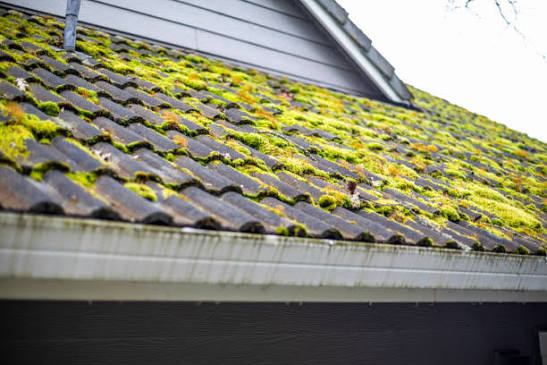
If moss begins growing between shingles, moisture is remaining on the roof for extended periods.
Moss should be removed promptly to help prevent moisture-related damage.
A roof that appears blotchy or uneven often has algae, mildew, dirt, or organic buildup covering portions of the shingles.
Leaves and branches trapped in roof valleys hold moisture and encourage biological growth.
Routine maintenance helps prevent this buildup.
One of the biggest mistakes homeowners make is using a pressure washer to clean their roof.
High-pressure water can:
Even though pressure washing may remove visible stains, it often causes far more damage than the algae itself.
Roof soft washing is a low-pressure cleaning method specifically designed for delicate roofing materials.
Instead of relying on force, soft washing uses specialized cleaning solutions to eliminate algae, mold, mildew, and bacteria at their source.
After the solution has had time to work, the roof is gently rinsed using low-pressure water, leaving shingles clean without causing damage.
This process safely restores your roof while helping prevent algae from returning as quickly.
Few improvements make a home look newer than a clean roof.
Removing black streaks instantly enhances your home's overall appearance.
Removing algae and organic buildup reduces unnecessary wear on roofing materials.
Replacing a roof is one of the largest expenses homeowners face.
Routine maintenance helps protect that investment by keeping roofing materials in better condition.
A clean roof complements freshly cleaned siding, windows, gutters, and concrete, giving your home a well-maintained appearance from top to bottom.
Routine roof maintenance is significantly less expensive than repairing moisture damage or replacing roofing materials prematurely.
Most homes benefit from professional Roof Soft Washing Services every 2 to 5 years, depending on environmental conditions.
Homes with heavy tree coverage, significant shade, or recurring algae problems may require more frequent maintenance.
Scheduling regular inspections can help identify algae growth before it becomes severe.
Homeowners throughout Fort Worth trust Total Wash and Stripe for safe, professional exterior cleaning services.
Their experienced team provides:
Using professional soft washing equipment and proven cleaning methods, they safely restore roofs without damaging shingles, helping homeowners protect one of their most valuable investments.
Roof algae may begin as a few harmless-looking black streaks, but over time it can trap moisture, reduce curb appeal, and contribute to premature roof deterioration. The safest and most effective way to remove algae is through professional Roof Soft Washing Services, which eliminate organic growth without the risks associated with high-pressure cleaning.
If your roof is showing signs of algae, moss, or dark staining, don't wait for the problem to spread. Investing in routine roof soft washing helps protect your home, extend the life of your shingles, and keep your property looking its absolute best.

Contact Total Wash and Stripe today to schedule professional Roof Soft Washing Services in Fort Worth and request your free estimate.


