
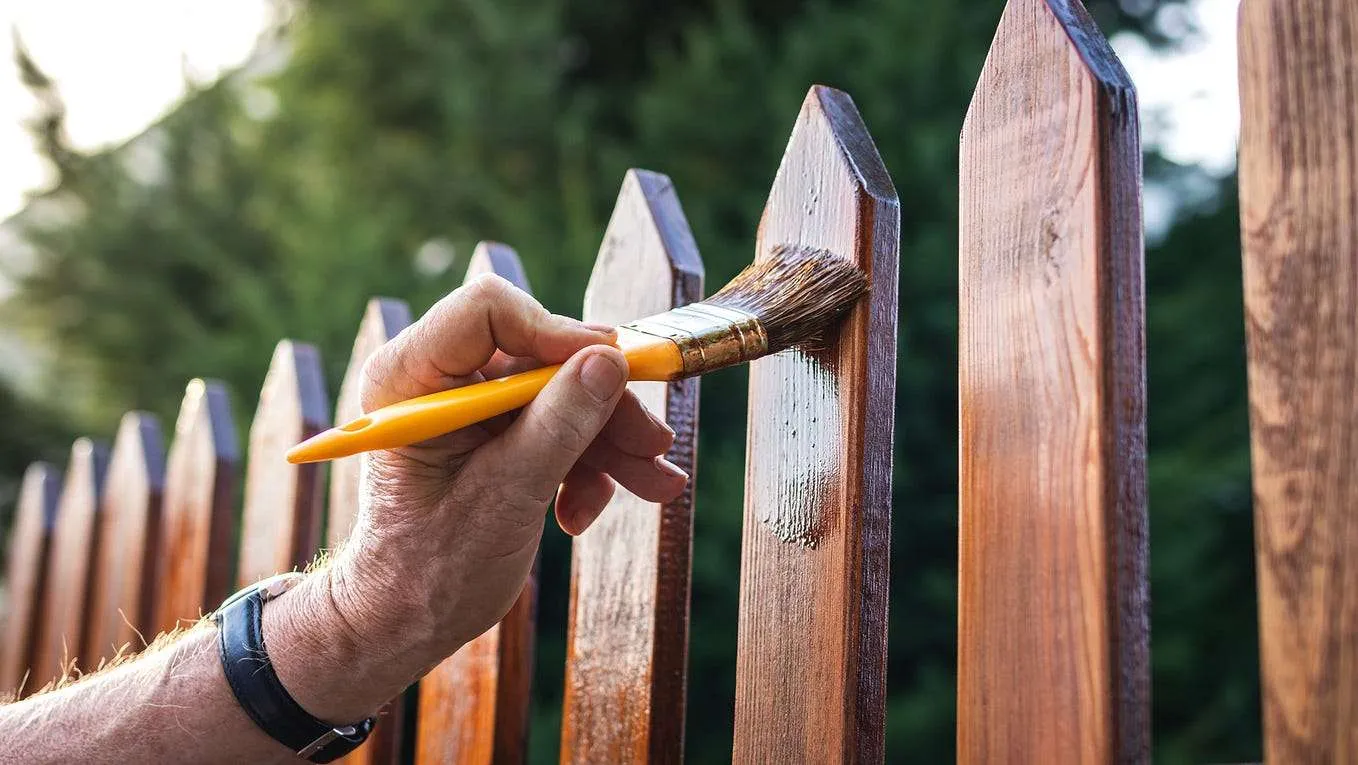
Look at the fence in your backyard right now. If it was natural wood when it was installed, chances are it looks nothing like it did on day one. Texas is relentless on wood fences. Between the triple-digit summer heat, intense UV radiation, North Texas storm season, spring humidity, and the constant biological growth that comes with it, a wood fence in Fort Worth can go from freshly installed to visibly weathered, gray, and cracking in as little as one to two years without proper maintenance.
Fence washing and staining in Fort Worth is the single most effective way to protect your wood fence investment, extend its lifespan by years, restore its original beauty, and avoid the costly process of full fence replacement that neglect inevitably leads to. If your fence is graying, darkening with mildew, cracking in the boards, or simply looks like it has seen better days, this guide covers everything you need to know.
Fort Worth homeowners deal with one of the most demanding climates for outdoor wood structures in the country. Understanding the specific threats your fence faces helps explain why regular fence washing and staining is not optional maintenance — it is the difference between a fence that lasts 15 to 20 years and one that needs full replacement in five to seven.
Fort Worth receives intense sun exposure for the majority of the year. UV rays are one of the most destructive forces acting on your wood fence because they break down the lignin in wood fibers — the structural compound that gives wood its color and strength. As lignin degrades, the wood surface turns gray, loses its natural tone, and begins to develop surface cracks. In Texas, where UV exposure is among the highest in the country, this process happens noticeably faster than in cooler or cloudier climates. A fence without stain protection can visibly gray within a single summer season.
Fort Worth's spring storm season delivers significant rainfall in short bursts, and summer humidity keeps moisture levels elevated for extended periods. Untreated wood is highly absorbent — it soaks up water during rain events, expands, and then dries and contracts as conditions change. This repeated cycle of expansion and contraction causes boards to warp, crack, and split over time. More critically, moisture trapped inside wood fibers creates the ideal conditions for rot, which spreads silently through fence boards and posts and significantly shortens the structural lifespan of your fence.
The combination of Fort Worth's humidity, warmth, and organic debris from nearby trees creates near-perfect conditions for mold, mildew, and algae to colonize fence surfaces. You will typically see this as dark black or green staining — particularly on the shadier north-facing sides of fence boards or along the fence base where moisture accumulates. This is not just a cosmetic problem. Mold and mildew trap moisture against the wood surface, accelerating rot and penetrating deeper into the boards with every rain cycle.
Wood fences without protective staining are more vulnerable to insect activity. Termites, carpenter ants, and wood-boring beetles are active throughout Tarrant County and are drawn to untreated, weathered wood. Staining creates a protective barrier that makes the wood less hospitable to insect infestations and reduces the risk of structural damage from boring activity.
Fort Worth neighborhoods are full of oak and pecan trees that drop tannin-rich leaves, acorns, and organic matter directly onto and around fences. Tannins leach out of organic debris when wet and stain wood surfaces with dark, rust-colored streaks that are extremely difficult to remove without proper cleaning. These stains are not just aesthetic — they indicate ongoing moisture contact that is accelerating the degradation of your fence boards.
This is the step that the vast majority of DIY fence staining projects get wrong, and it is the primary reason that homeowner-applied stain jobs fail prematurely. Stain applied to a dirty fence does not work properly. It is that simple.
Wood stain is designed to penetrate deep into the wood fibers, bonding at a molecular level to provide long-lasting moisture resistance and UV protection. When the surface of the fence is covered with dirt, mildew, mold, pollen, old stain residue, or any other contaminant, the stain cannot penetrate properly. Instead, it bonds to the surface contamination rather than the wood itself — and when that surface layer breaks down, the stain peels, flakes, and fails, often within a single season.
Professional fence washing in Fort Worth thoroughly removes all surface contamination before any stain is applied, using low-pressure washing techniques combined with professional-grade cleaning agents that are formulated for wood. The pressure and cleaning solution are carefully calibrated to clean the fence without raising the wood grain or damaging the boards — which is a real risk when pressure is applied incorrectly.
After washing, the fence must be allowed to dry completely — at least 24 to 48 hours in typical Fort Worth weather conditions, longer after periods of rain or high humidity. The moisture content of the wood should ideally be at or below 15 percent before stain application to ensure maximum penetration and adhesion. This drying period is non-negotiable. Stain applied to wet wood traps moisture inside, causing blistering, uneven color, and premature failure.
A properly washed and dried fence gives the stain the clean, open wood surface it needs to penetrate deeply and bond effectively — which is what produces results that last two to five years rather than peeling off by the following spring.
A properly maintained wood fence in Fort Worth — one that is regularly washed and stained every two to three years — can last 15 to 20 years or more. A neglected fence that never receives protective treatment typically begins showing serious structural deterioration within five to seven years and often requires partial or full replacement within a decade. The cost of professional fence washing and staining is a fraction of the cost of new fence installation, making it one of the highest-return maintenance investments a Fort Worth homeowner can make.
Quality oil-based fence stains used by professional applicators in Fort Worth penetrate deep into the wood fiber and contain UV inhibitors that reflect and absorb solar radiation before it can break down the wood's structural compounds. This stops the graying and cracking process, preserves the wood's natural color and grain, and maintains the fence's structural integrity through years of Texas sun exposure.
Professional fence stain creates a deep moisture barrier inside the wood itself — not just on the surface. This prevents water absorption during rain events, stopping the expansion and contraction cycle that causes warping and cracking. It also eliminates the conditions that allow rot to establish and spread, protecting the structural integrity of your boards and posts. A stained fence sheds water rather than absorbing it, dramatically reducing the rate of deterioration.
Professional fence washing completely removes existing mold, mildew, and algae colonies from your fence surface. When combined with a quality stain treatment, the protective coating significantly inhibits the return of biological growth by eliminating the porous, moisture-absorbing surface that mold and mildew need to establish themselves. Treated fences stay cleaner and resist biological growth far longer than untreated surfaces.
A freshly washed and stained wood fence transforms the appearance of your entire property. The difference between a gray, weathered, mildew-streaked fence and one that has been professionally cleaned and stained is immediately dramatic — it looks like a completely new fence without the cost of replacement. In Fort Worth's active real estate market, a well-maintained fence contributes meaningfully to your home's curb appeal and perceived value. Many real estate professionals cite fence condition as one of the first things buyers notice when viewing a property.
Many Fort Worth neighborhoods have HOA guidelines that require homeowners to maintain fences in good condition — which specifically includes addressing visible weathering, discoloration, and mold growth. A professionally washed and stained fence keeps you well ahead of HOA requirements and avoids the formal notices and remediation timelines that come with deferred fence maintenance.
Not all fence stains perform equally in Fort Worth's demanding climate. Understanding the differences helps homeowners make informed decisions about what their fence needs.
Oil-Based Penetrating Stains are the preferred choice for Fort Worth wood fences by most professional applicators. Oil-based stains penetrate deep into the wood fiber rather than forming a surface film, which means they move with the wood as it naturally expands and contracts with temperature changes rather than cracking and peeling. They provide superior moisture resistance and UV protection and typically last longer in Texas's demanding climate than water-based alternatives. Oil-based stains are the right choice for most cedar and pine privacy fences across Fort Worth neighborhoods.
Semi-Transparent Stains allow the natural wood grain to show through while providing solid UV and moisture protection. They are a popular choice for Fort Worth homeowners who want protection without fully covering the natural character of the wood. Semi-transparent stains require re-application every two to three years under typical Fort Worth conditions.
Solid Stains provide the most complete UV protection and are the right choice for older, heavily weathered fences where the natural grain has already been significantly damaged and needs to be fully covered. Solid stains essentially function like paint from a visual standpoint but still penetrate the wood rather than forming a brittle surface film.
For most Fort Worth homeowners with cedar or pine privacy fences, a premium oil-based semi-transparent stain applied by a professional after thorough washing delivers the best combination of protection, appearance, and longevity.
The general recommendation for wood fences in the Fort Worth area is washing and re-staining every two to three years. However, several local factors can shorten that interval:
Wash and re-stain more frequently if:
Signs your Fort Worth fence needs washing and staining right now:
When you hire a professional for fence washing and staining in Fort Worth, here is what the process looks like from start to finish:
Assessment and Inspection — A professional technician walks the fence line, evaluates the condition of the boards, identifies any boards with significant rot or structural damage that need attention before staining, and discusses the homeowner's preferred stain type and color.
Surface Preparation and Washing — The fence is thoroughly washed using low-pressure equipment and professional-grade wood cleaning solutions that remove mold, mildew, dirt, tannin staining, and any residual old stain. This step is performed with care to clean effectively without damaging the wood grain or boards.
Drying Period — The fence is allowed to dry completely — a minimum of 24 to 48 hours under typical Fort Worth conditions — before any stain is applied. This non-negotiable step ensures maximum stain penetration and adhesion.
Professional Stain Application — Using commercial-grade sprayers and application equipment, premium oil-based stain is applied evenly across the entire fence surface, ensuring complete saturation of the wood for deep penetration and long-lasting protection. Surrounding landscaping, concrete, and structures are protected from overspray throughout the process.
Final Inspection — The completed fence is inspected to ensure even coverage, consistent color, and complete protection across all boards before the job is considered finished.
Between professional washing and staining services, here are a few steps Fort Worth homeowners can take to extend the life of their stain treatment:
Your wood fence represents a significant investment in your property's privacy, security, and curb appeal. In Fort Worth's demanding climate, that investment needs protection — and professional fence washing and staining is the most effective, most affordable way to provide it. Whether your fence is brand new and needs its first protective treatment, or it has been years since the last service and is showing the telltale signs of weathering and neglect, the right time to act is before the damage gets worse.

Is your Fort Worth fence overdue for a professional wash and stain?At Total Wash and Stripe, we provide professional fence washing and staining services for homeowners across Fort Worth, Keller, Southlake, Arlington, and the greater Tarrant County area. We thoroughly clean your fence before every stain application, use premium protective stains formulated for Texas's demanding climate, and deliver results that protect your fence for years.


