

.webp)
A restaurant dumpster pad can go from reasonably clean to greasy, stained, and unpleasant much faster than most other exterior areas. Food scraps, leaking trash bags, cooking oils, sauces, spilled liquids, and daily dumpster traffic all contribute to buildup.
So, how often do you clean dumpster pad areas around a restaurant?
There is no single schedule that works for every business. A busy fast-food restaurant may need professional cleaning every one or two weeks, while a lower-volume business may be able to maintain its dumpster area with monthly service.
The right frequency depends on waste volume, grease exposure, odors, staining, pest activity, weather, and how quickly the pad becomes dirty after cleaning.
Total Wash and Stripe provides professional dumpster pad cleaning and sanitation for restaurants and other commercial properties that want a cleaner, easier-to-maintain waste area.
For many food-service businesses, a good starting point is professional cleaning every two to four weeks.
That recommendation should be adjusted based on the actual condition of the dumpster area.
A restaurant that produces large quantities of greasy waste may need service weekly or every two weeks. A small cafe with limited food waste might need professional cleaning every four to six weeks.
The important thing is not following a calendar blindly. It is preventing buildup from reaching the point where grease, odors, and food residue become difficult to control.
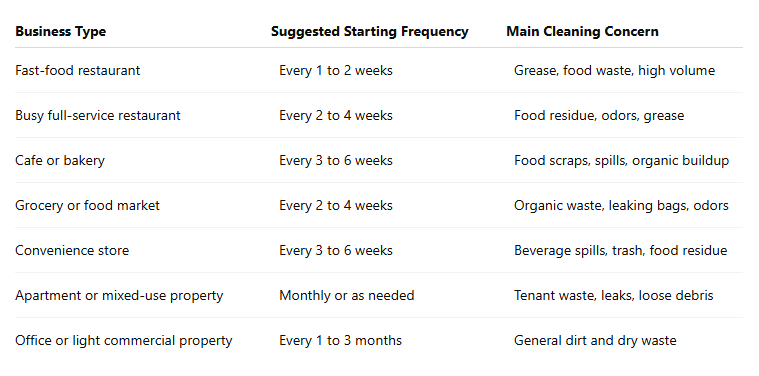
These are practical starting points, not fixed rules. The pad itself should determine whether the interval needs to become shorter or longer.
Fast-food and quick-service restaurants can create a challenging waste environment.
High customer volume means more trash bags, more food residue, more packaging, and greater potential for leaking liquids.
Restaurants that fry food or handle significant amounts of cooking oil may notice greasy buildup around dumpsters and grease containers much sooner than businesses producing mostly dry waste.
Grease can stick to porous concrete and collect additional dirt.
Waiting several months between professional cleanings can allow layers of contamination to accumulate.
Employees should regularly check for:
A professional cleaning schedule works best when it is supported by routine housekeeping between visits.
Not every restaurant generates waste at the same rate.
A smaller sit-down restaurant may not need weekly professional service, especially if employees handle spills quickly and the dumpster remains properly managed.
For many full-service restaurants, cleaning every two to four weeks can provide a reasonable starting point.
Seasonal traffic can change how quickly a dumpster pad becomes dirty.
A restaurant may need more frequent cleaning during:
Instead of locking the property into an inflexible schedule, review the condition of the pad after several service cycles.
Cafes and bakeries may produce less fryer grease than some restaurants, but they still generate food waste.
Coffee grounds, milk, syrups, dough, dairy products, baked goods, and beverage residue can create odors and sticky buildup around waste containers.
Professional cleaning every three to six weeks may work for many lower-volume locations.
However, businesses with busy drive-through operations or substantial food preparation may need a shorter interval.
Grocery and food retail locations can generate a wide variety of organic waste.
Produce, spoiled food, meat packaging, liquids, cardboard, and damaged products may all end up near a waste area.
A property with several dumpsters, compactors, or recycling areas may require more time and attention than a restaurant with one enclosure.
Managers should inspect each waste station rather than assuming all areas become dirty at the same rate.
Total Wash and Stripe can combine dumpster-area service with commercial pressure washing for sidewalks, entrances, service areas, and other exterior surfaces when appropriate.
A recurring dumpster pad cleaning schedule should be based on actual site conditions instead of choosing the longest possible interval to reduce short-term costs.
Start with a reasonable frequency and monitor what happens before the next visit.
Begin with a professional cleaning so you can establish a clean baseline.
This makes it easier to see how quickly grease, stains, and odors return.
Managers or employees can perform a quick visual inspection.
Look for changes in:
If the pad becomes heavily soiled before the next scheduled visit, shorten the interval.
If it remains reasonably clean, the current schedule may be appropriate.
A recurring program works best as preventive maintenance.
The goal is to clean the surface before the area becomes difficult, unpleasant, or expensive to restore.
Your existing schedule may be too infrequent if you notice recurring problems well before the next appointment.
Common warning signs include:
If several of these problems are occurring, moving from monthly to biweekly service may be more practical.
Restaurant dumpster pad cleaning in Burleson should be planned around the individual property.
A high-volume drive-through restaurant may need far more frequent attention than a small cafe, even if both are located only a few streets apart.
Local business owners should consider their waste volume, type of food served, customer traffic, dumpster capacity, and how often grease or organic waste reaches the surrounding concrete.
Total Wash and Stripe works with commercial properties looking for one-time and recurring exterior cleaning solutions.
Restaurant owners can also review examples of Total Wash and Stripe's exterior cleaning work and read Total Wash and Stripe customer reviews on Google when evaluating a cleaning provider.
For many restaurants, yes.
Waiting until the dumpster area becomes heavily stained means each cleaning may involve more grease, odor-causing residue, and embedded grime.
Recurring service helps control the problem earlier.
A regular schedule can help:
It also removes one task from the restaurant manager's mental checklist because the next cleaning is already planned.
There is no benefit in paying for cleaning more often than a property needs.
There is also little value in stretching the schedule so far that every visit becomes a major restoration project.
The best interval falls somewhere between those extremes.
Total Wash and Stripe can evaluate the current condition of the dumpster pad, discuss how the property uses the area, and recommend a practical service schedule.
If you are unsure how often to clean dumpster pad areas at your restaurant, start with a professional assessment and adjust the interval based on how quickly contamination returns.
For restaurant dumpster pad cleaning in Burleson and surrounding service areas, contact Total Wash and Stripe for a free estimate and discuss a one-time or recurring cleaning plan.
Many restaurants can start with professional cleaning every two to four weeks. High-volume or grease-heavy restaurants may need weekly or biweekly service, while lighter-use businesses may need cleaning every four to six weeks.
Weekly service may make sense if grease, food residue, odors, or slick buildup return within days of cleaning. High waste volume and frequent dumpster use are also signs that a shorter interval may be useful.
It can be for some businesses. If the pad remains manageable throughout the month and employees handle spills between professional visits, monthly service may be appropriate. Restaurants with heavy grease or food waste may need more frequent cleaning.
The schedule should consider professional cleaning frequency, routine employee inspections, spill response, waste pickup frequency, dumpster condition, and seasonal changes in customer volume.
Professional cleaning can address grease, food residue, dirt, and other buildup using methods appropriate for the condition of the concrete. Older or deeply absorbed staining may require more treatment than fresh contamination.
Yes. Total Wash and Stripe offers dumpster pad sanitation and other commercial exterior cleaning services. The frequency can be based on the condition and use of the property rather than using the same schedule for every business.
Provide details about your restaurant, number of dumpsters, current pad condition, and whether you are interested in recurring service. You can review additional service information on the Total Wash and Stripe FAQ page or request a customized estimate directly.


